Friday, 8 April 2016

For the Love of God

I recently watched Damien Hirsts’ documentary -Thoughts, Work, Life (2012). It struck me how much emphasis was put on the value of: ‘’For the Love of God’’.


In the part of the documentary where ‘’ For the Love of God’’ is presented, it is introduced with a few short clips of Hirst being interviewed. In all of these interviews he is repeatedly asked questions around the value of the artwork, its worth, and things such as how many diamonds were used etc.
Hirst repeatedly replies in a somewhat dismissive and annoyed manner, that: ‘’ it is not about the money...’’
This reminded me of a stage I went through a few years ago, where I really questioned what art is, or should be.
I guess most artists go through this- maybe even a few times in their career. The short answer I found, is that art is something truthful, created from a very honest place.
The monitory value has no indication of its value to the ‘true’ artist. In this case, Hirst.
Whilst I was grappling with art, what art is and art practice a few years back, Hirst happened to produce ‘For the Love of God’.
The way it seemed the large majority responded to the work, proved to me that capitalist notions exceed the appreciation for artistic genius, it masks meaning, in a way that takes away from the truth.
Despite the exact reasons Hirst created the work, to me the meaning was this – We will all die, despite the material possessions we have or gain in this life.
It spoke of greed and death and our sinful desires. How death remains constant, even when decorated. It spoke to me of a capitalist society, lived through wars started over greed of material things and religions.
In short I thought how most people received the work proved exactly these statements – the material value exceeded the meaning. The focus was shifted immediately to the value of Hirst’s piece.

I thought about the skull a lot – who it belonged to etc.
My dad always had a real human skull that was converted into a decorative ashtray in his bar at home. Ever since I can remember this scull- that I later found out was purchased on one of his trips to Hong Kong- was displayed and used in his bar. Guests were usually humoured by this ashtray, as a little girl I could never get my head around that.
This used to be a person – just like us – that died – just like we will. To me there was no humour to be found in this.


Furthermore, using the scull to smoke with and to put your cigarettes out in was like ‘cheating’ death in a way, perhaps mocking it. We all know the result of smoking.
It surprised me how our own desires and ‘greed’ our addictions purely for our pleasure was used to ‘mock’ and laugh off something serious and certain - death.

It reminded me how people put emphasis on the value of the diamonds on Hirst’s skull, but forgot about the person who died.
How people blindingly stare at death (the skull), but prefer to ignore the certainty of death completely and focus on the material. How our desires and greed is more powerful these days than life itself.

I decided to create a smoke room for my next exhibition. This all also happened around the new smoking laws in South Africa, where people had to smoke in a ‘room’ specifically created for smokers.
I was a student at the time, and had very little money, but I wanted to enhance this feeling of death – I wanted to shift peoples focus.
I managed to get a company to lend me a 6 foot walk in fridge/freezer.


I set the temperature to that of a morgue – this would be the smoke room.


I placed a little table inside with the skull ashtray on it.
(Interestingly Hirst also worked with ashtrays in his earlier work, I only recently discovered this
Around the ashtray I placed lighters with Palestinian leaders on them. To light your cigarette, you had to flip the lighter like a hand of cards.


The cards unfolded with the leaders face on the front.
This to me enhanced the idea of luck, limited time, politics, war and greed.
Outside I placed a cigarette machine.
Instead of writing the prices of the different packs of cigarettes, I wrote Hirst’s title…. ‘For the love of God’ on the digital price display screen.


People were confronted with their beliefs and religion, instead of a price tag when they collected a pack of cigarettes to go smoke inside the cold room.
They were also confronted with one of the titles of possibly the most popular work of art of our times.
I hoped to have shifted their focus, to recognise not only the real meaning in Hirst’s work, but to realise how often we miss the meaning by our inherent greed and desires. By masking reality with desire, we ignorantly can be the cause of our own lives lived in vain.
I found Hirst’s documentary profound. It answered many questions I have always pondered and explained experiences I had as a student and thus far in my career.

I have absolutely no doubt that he is a genius – a true artist, and in some senses a muse to me after watching this.

xxxx

Monday, 7 March 2016

Writing Again - Drawing Again


So here goes – my first post after a long battle with writers block. Since I last posted, I have been drawing non stop, as well as moving and running my little family. I am still working hard on an exhibition, though I am not sure where and when it will be exhibit.
My hopes are obviously somewhere spectacular as soon as possible!

My last post was about drawing, and it seems the more I draw the more I discover and learn through the process – as with creating anything I guess.
The process of drawing is just such an intense, emotional one for me. At one stage after and during the last years of university, I remember having this fear of subject matter within drawing and painting. Is my subject matter valid?

I always enjoyed the drawing and painting process – since I can remember – even as a very small child. I remember having a best friend in grade two , I was 7 years old, him too. I used to go to the library and take out a book called OTTO – about a doggy and his mom. I used to think he was the most adorable little character.


 I would take the book to class with me, and my friend and I would sit at the table with the book open between us.
We created this challenge of seeing who could draw Otto the best (without tracing him, just looking at the page in the book.) I always won – which I am sure I loved as my poor friend turned out to be not interested in art or drawing at all later in is life.
He carried on to finish both primary and high school with me. We sadly lost our connection along the way though. Possibly because of our vastly different interests.
Another recollection of drawing I had was in grade 3, I was now 9, and had to draw on a large paper, a bicycle the teacher placed in front of the class.
I remember finding it incredibly hard to draw from a real life object, and to get down all the detail and proportions to my 9 year old perfection.
When I was finished drawing the bicycle, I felt I had nailed it – I remember feeling as if the bicycle was perfect and one of the things I felt proudest of drawing ever before that moment.
The dilemma came after – and this was maybe my first real encounter with subject matter. We were instructed to place our bicycles into a setting.
I found this odd, as I drew the bicycle with no intention and in the proportion of the particular classroom with no one riding it. I had to do as I was told, so I did – I drew a curved road, and decided the bicycle needed a man on it.
I drew a man on it – but I was never ever more horrified with the proportions of a nose I have drawn, than with this guy’s.
In an artistic sort of transcendent angst (I get this still from time to time during the creation of my artworks), I drew a red nose with the same crayon over his face – to make him a clown…. It looked terrible….
Then I drew some red hair on him….
I was losing my shit – everything I did to cover it up made it worse for me.
I remember starting to cry uncontrollably – something I never did in front of a class of piers– not back then anyway.
The rest was a blur!
I hated that drawing.
The teacher ended up putting it on the annual school exhibition, and I could not understand why.I guess she might have felt sorry for my tears over it, or maybe she was trying to teach me some lesson of sorts.
Nevertheless – lesson not learnt ,if there was one intended, and I still hated the damn drawing.
I threw it in the bin as soon as it came off the show – I would die twenty deaths if my mom ever had to lay eyes on it.

I was always doubting what I drew as soon as the teachers stopped giving us a theme.
This is something I feel universities can challenge students with – stop giving them themes – let them broaden their horizons, and find their own way.
After not drawing a few years, and all of a sudden starting again, I thought I would start out drawing things I liked.
So I have always enjoyed images – I have collected and taken them ever since I can remember.
I used to construct my painting themes by making my poor sister do the most ridiculous teenagy things – like posing with a cigarette etc. To put that into a painting with a much too broad theme for my hormone tortured 16 year old mind.

So now when I thought of a drawing exhibition, I at first decided I will just draw images I liked – of organic things. Little did I know these images will all be good enough and valid in every way, subject matter and all.
This is partly because I soon discovered that images (sourced from magazines and the web) are much more alive than I could ever imagine. In a way one could say each image has a life of its own.
Every time I started a drawing with an image, it made me think of another image…. And after a while I would pic images from magazines and other pop sources cause they became applicable and somewhat iconic to my own life.


Whilst drawing a stock image I found in a magazine, it started reminding me of a picture I took on a magical day I spent with someone being the most in love I think I have ever been. He always stands the same way the man in the stock image does for photographs, and he moves his hands in the same way. His pose on that day reminded me of Jesus – as well as his peaceful way.

I started drawing the stock image, of a person I did not know, and it turned out to reminded me of a person I know personally.
The T-shirt my friend was wearing on the day contained a scull – a laughing scull – this reminded me of how hard he lives. Almost as to try balance out this peaceful way. In ways that makes me think he sometimes challenges life.
The colour red is never something good in my drawings – the line serves as some sort of connecting narrative–– in this case the red lines symbolized death.

Some examples of red (line) usage in some drawings


In this particular drawing the lines also symbolize the fine line of balance between life and death and coming from the wrists, Jesus’ hands bleeding on the cross (sin etc.).
I never draw faces on my figures - these stock images become part of my life, the figures become people or symbolic to my story.

Pictures of the final drawing


Because I did not plan what, where and when before I began drawing again, I started on a piece of paper that’s size I liked (and had), not knowing what I was going to draw….
The first drawing I did became larger, as it started relating to my life and therefore other images I found needed to be added. I had to just add a piece of paper, and I did.
I thought about this. I liked how the drawings was still growing, yet they can still fit into my drawer. They found a way to fit into my life organically, whilst maintaining their freedom.
I realised that is how art, relationships, drawing and essentially life should be.
Free.
Free to grow.
Free to be what it wants to be.
Free to tell my story in its own language.

 I feel as if each drawing comes alive. The more I draw, the more I remember.
The drawing shapes itself around these nostalgic emotions. Each line is considered carefully on basis of these thoughts. Both in intensity as well as shape.
A simple stock image or advertisement becomes something along the lines of a personal diary. It morphs itself to fit into my life.
I try keep it as free as possible. I don’t confine it to a single paper. If it wants to be larger, I add another paper (and another) paper.
Even the lines between the two joined papers in this way becomes symbolic to me.

Both drawing and painting has proven to me that the process will always transcend the subject matter. That it is vitally important to keep the process free in order to achieve the maximum from the subject matter.


XXXX

Wednesday, 9 September 2015

Emotion Pictures


I find myself haunted after seeing the image of little, three year old Syrian refugee, Aylan Kurdi (as well as the bodies of other children) washed up on the Turkish beach.
After discussing my relationship to images in a recent blog post, I mentioned that I have a very good memory of the images I see, even from when I was very little.
Images have a profound effect on me.
I think in Images, I remember in Images, I dream in Images, I communicate in Images. I live my entire life visually.

This image tore my heart out.
I find myself crying when thinking about it.
It is the single most powerful image I have ever come across.
It haunts me.
It disturbs me to the core.

It made me wonder how this little boy, and the other parents of these little toddler bodies -which were photographed and posted- must feel.
The night I saw it, I immediately climbed down the steps and went to Luke, where he was sleeping on his little toddler bed.
I can only imagine the pain these parents must feel.
It made me question the ethicality of posting such imagery.
Images with such power that they change the world, yet so personal.

I thought about ignorance.
That of humans as to what is going on around us.
Is this what we need to see in order to feel a connection to fellow human beings?

It made me think of the right to have a choice in what you see.
Social media has stripped us of this right.
It made me question whether it would have been better if I did not see the image, because I can not get the image out of my head.
It has consumed me.

I thought about the ways we view things, and my sister that now lives in the states.

She lived here in South Africa till two years ago. Recently she mentioned (pre the Syrian image) that she was affected terribly by the amount of beggars etc. around Johannesburg during her last visit.
It was strange to me as she was not that affected by it when living here.
Do we become de sensitized according to the amount of time we witness something -in the same way we don’t easily laugh as adults like we used to as children.

It made me think of ways to try ease the horror this image has made me feel.

If I draw an image do I become more sensitive to it?
If I had to draw these little bodies, I will have to intently focus on each line.
I will have to capture the round soft innocent limbs only toddlers have.
I will have to focus on each little part so hard in order to truthfully portray them.
I would look intently at each part of the image/s hundreds of times till the drawing is finished.

I usually use the reference of an image I chose many times in the beginning of the drawing- the further I am the less I use the image. As the drawing starts taking on a life of its own, becoming free from the clutter of its surroundings, the picture/reference becomes less relevant.

I want to say that through drawing the image I am set free in the same way I usually free the subjects of my references. However, I think this image is simply too powerful.

I wonder what would happen if I had to draw the same image over and over. Would I not need the reference at all?
Will I become de sensitized to this image in the same way South Africans have become towards beggars at street lights.
Will it do the opposite?

I wish I could forget this image, but it is too late.
I won’t hesitate to draw the image a hundred times over if someone guaranteed me relief.
But there is no guarantee, it might get worse, and I don’t know yet if I can risk having to look at the image/s so many times in order to draw it.
I have been avoiding any links or anything related to the image, as I cannot bare to look at it.
It breaks my heart.
I can only hope that drawing the image/s will help, and that I will build up and maintain the courage to view it over and over when drawing the tiny bodies.

For the parents who lost children, as well as parents of suffering children around the world, I have no words to describe my empathy.

To the parents of the Syrian toddlers who drowned, and to those whose children were photographed I can with certainty say that your children’s lives changed the world for the better.
These pictures are very personal, and I am not sure how these parents must feel about the pictures being made public.
I can only say that I am sorry Humanity failed you.
That I hate war and I have no respect for soldiers.
Violence is not acceptable.
To the victim of these wrongfully socially constructed borders, my heart goes out to you.
I am so very sorry.
I am certain nothing will erase this from a parent’s memory.
I hope somehow you will find some comfort.
xxxx


Wednesday, 26 August 2015

#tbt #7 Drawing out the subject

I have unexpectedly been included in a group exhibition next week, at a gallery where I am hopefully having a drawing exhibition later on next year- in Johannesburg.
I am not sure what the other artists on the show will be exhibiting this coming week.
I do however know that I am included so that the gallerist/s can see exactly what kind of drawing or painting skills I will exhibit.
Mmmm…

The thing I am struggling with here is a concept…
How will I produce a single drawing that will stand strong amongst other works by other artists?
The challenge lies right here- the same challenge I wrote about in my previous blog post… The conceptual catwalk.

I have tried to stretch my thoughts about what drawing is, what is it that inspires me to draw, and why I choose the subject matter I usually draw.
The answer is this.
I like to draw the organic.
Bodies, animals, plants, water - things that move.
Things with emotion.
Things that make me feel.
I then exclude everything else.

I often get asked why I do not draw much of a background.
My figures and subject matter are almost always floating - anchored to the space around it with a few loose lines.
This line always differs in boldness, in frequency and in style according to what the subject makes me produce.

I draw things from real life.
I have always loved paging through fashion magazines.
I love drawing the figures of the models.
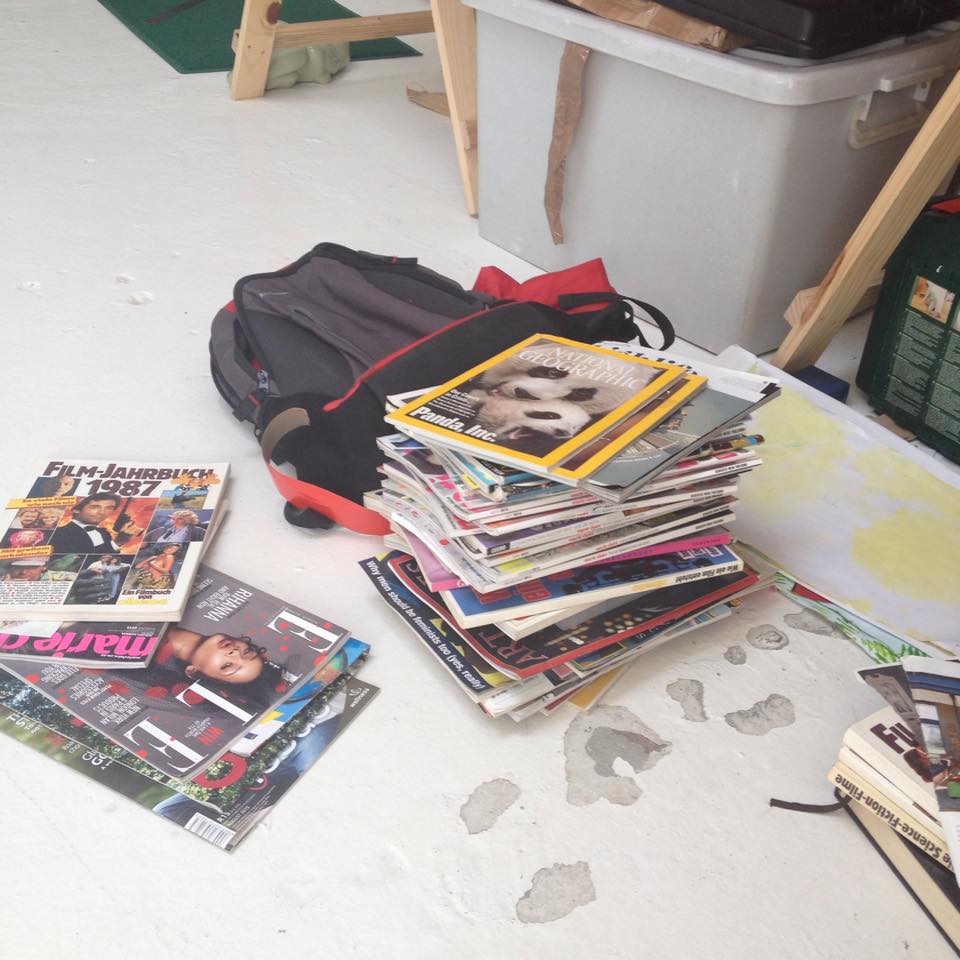
I love drawing the animal bodies from National Geographic magazines.
I love drawing sportsmen and women.

The way a person stands, an animal’s muscles flex, or mouth moves when stalking prey…
The way the bones of a thin model protrudes, a hand clutches a bag.
The way the tree roots press through the ground.
To me these little things tell a whole story.

It’s these little things that demand an emotional response.
They reveal and at the same time try to conceal a weakness or strength.

Most often it is not a story at all, but a small thing that serves as a reminder.
Often the pose or position of the subject matter can be related to other things, Iconic things.
In a drawing I just finished for next week, I paged through ‘The Lake’ Magazine.
I immediately knew I wanted to draw a diving figure in a Billabong surfer advert.
Drawing the figures feet, it reminded me of Jesus’ feet nailed to the cross.


Iconic depiction of a crucified Christ figure..


One of the nights I was working on the drawing, I joined a few photographer friends whilst they edited their pics. They are out-doorsy, sporty, skateboarders and surfers with an insatiable lust for life and a marijuana habit.
This reminded me again of the free spirit this figure in the pic had. Diving, in bubbly blue water, long hair, free spirited in appearance.
Yet he was possibly also a teenager with religious constraints. someone that sins, some model that hated diving into the freezing water, and that just wanted the shot for the ad to get paid.
A person tortured like the rest of us by everyday demands like religion, forgiveness, making money and surviving.
Surrounded by the smell of marijuana whilst I was drawing made me think of how they were also just trying to escape these daily demands and the monotonous routine of survival in a modern world.

From there I thought of how similar and different people are, all at the same time.
The title I decided on was INRI/IRIE.

Both titles are Iconic in their fields. One religious and the other part of Rastafarian belief. Both are born from cultural beliefs, and similar in many ways. Bringing calm and peace, but both can be so destructive.

There is nothing more tangible and revealing than a figure outline, or a pencil line on a white sheet of paper.
I love seeing a figure almost breaking free from the paper.
I love to focus on the organic.
I say ‘I love’ quite a bit, but that is purely because I cannot point to one thing that makes this so pleasing to me.
It makes me happy.
I feel like I am ‘freeing’ whatever I am drawing in a way.
I have also realised that I have never drawn anything not ‘alive’ or organic willingly (still lives at school doesn’t count);).

If I choose, I exclude the rest, and always just draw the live subject/s.

I remember three things we were taught in art school:
I do not believe there are rules- so these to me is a complete load of shit, but they were:
1. Never ever use paint colours straight out the tube.
2. Never ever draw with an HB pencil!
3. Do not use a National Geographic magazine as a reference.

I am adamant to do all 3 of these things, in three different exhibitions or in one exhibition. The last point “Never use a National Geographic Magazine” made me think.

My magazine stack always include National Geographic J


I used to study with a guy (a painter) who used to paint in quite a traditional realistic way.
He often used the National Geographic Magazines - and our one lecturer really could not stand this.
He always tried to push this guy into a more abstract and ‘loose’ way of painting.
So did everyone really.
I saw this guy recently, and to my relief he is still painting!
And in very much the way he used to.

I have met so many artists over the years that feel their work is too "tight".
Some even do rituals to try loosen their approach.
Things like dancing or listening to music whilst painting or drawing.

This to me has never made sense.

When I draw or paint I relate to the figure/subject in my own unique way. For instance focus especially on the part where I put the line down.
I concentrate on the pressure I apply to the line I am drawing.
Where the subject needs to be stronger and weaker.
I guess one can say that I try to exploit these strengths and weaknesses within the subject.
Almost like I want to free the subject from everything around it. I want to isolate it and make it speak louder - so that everyone can see the truth in those little muscle twitches, or broken branches, or clenched hand.
If an image is from a magazine, I will often crop out a hand clutching a bag, I will leave out any body part or clothing. I feel that any part that conceals or alter my interpretation of the truth is unnecessary...


My favourite magazines are those thick, fancy overseas Vogue magazines and National Geographic magazines.
I love images, I can literally flip through thousands- often taking pictures of parts of the pictures in these magazines.
I immediately know when I see a subject I am drawn to.
It is then when I try figure out exactly what drew me to the subject. How does the subject stir me? What part of the subject does this, and why.
I do this sometimes with television too.
I will pause and draw a figure bending, moving or doing something specific.

I still find drawing to be the most relaxing form of art.
The process is painstaking and a little torturous.
I, for instance, avoid music when I draw. I concentrate very hard on the subject and intensity of it in the purest of ways. I find music disturbs this intensity.
After I have drawn a subject I always feel a great sense of relief – the struggle is always worth it.
When a drawing is complete I feel a sense of freedom in a way.
I feel a sense of calm.
Like taking something out of chaos that was concealing or abstracting it’s truth/beauty.
Like birth- rebirth maybe (producing images from images).

Since I can remember I cut out images- little things.
I spent hours pasting snippets in my diary- drawing over them- pasting them on my cupboard.
I could never wait for my mom to buy her monthly magazines.
I still love going to the hairdresser, where there are piles of those thick fashion magazines.
I sit and drink tea and take pictures of the pictures.

These Images are from a book I picked up at a market the other day. We had the same book when I was very little… they stuck with me all these years. I knew they were in that particular book before I even opened it!


How cute is this little frog!


And the bubble and colour of this one..


And this baby babboon..

In the beginning of this post I was worried about a single drawing being strong enough to stand by itself in an exhibition with many other pictures.
I wanted to create something punchy, striking and memorable.
Thankfully, I remembered the three rules art school tried to enforce on me, and the struggle of my painter friend- being too ‘uptight.’
Maybe seeing him reminded me to search for the real reason I draw what I draw, and how I draw it.
I found that reason writing this post.
I free images.
That in itself is enough for me.
I can and want to forever do this.
The same way I have forever been excited to receive a pile of old magazines from a friend, my mom buying her monthly mags or going to the hairdresser.

xxxx

Thursday, 20 August 2015

#tbt #twentyjourneys #6

I found myself attending a documentary style photographic exhibition by three young photographers the other night.

At first, seeing the exhibition title “Twenty Journey”, to be honest, I was not intrigued.
It was only after I saw twenty guests attending on my friendship list on Facebook that I started becoming interested. However I was still sceptical.

To me artists like David Goldblatt laid the foundation in terms of documentary style photography in the History of South African Art, and younger artists such as Guy Tillim, Pieter Hugo and Zwelethu Mthethwa challenged these aesthetic foundations. Rodger Ballen is perhaps the artist who set the foundation for a stylised, posed, more contemporary ‘studio-non studio’ type aesthetic.

To me it seemed near impossible that these three young men, one white English, one white Afrikaans and one black, could produce challenging photographs with titles and subject matter such as ‘Born frees’, ‘Land’ and ‘Idiosyncrasies’. To me it seemed like these phenomena have been used and reused, visited and revisited so often post-1994 that there was little left to explore. I was even a bit taken aback by the poster displaying all three of them in what looked like a ‘stereotyped’ characterised depiction. It appeared to me like some kind of politically correct (almost satirical) marketing stunt.

To my surprise, I was blown away (and I have to admit very wrong).

Sean Metelerkamp, Sipho Mpongo and Wikus de Wet challenged and changed my entire view on documentary photography in current South Africa.

I obviously did not like all the photos but overall I was very impressed. Influence from one or all the above mentioned older artists was visible in the images these new guys produced. They just did it in such an honest open and revolutionary way.


The strongest image of the exhibition to me personally was this one by Sean Metelerkamp.


 The other two images that really stood out to me were these by Wikus de Wet:


These images struck me as the best for personal reasons which I won’t go into detail about here.

I do need to explain Metelerkamp’s image (the first one) though in order for my story to make sense. 

I will do so later on in this post.

To me de Wet had the strongest body of work.

Upon arrival at the gallery I was surprised at seeing de Wet in Khaki clothing. They were relating to their poster, an attempt to create 3 diverse characters as part of a satirical marketing stunt - almost Leon Schuster inspired!!!!

I met de Wet after the show, and I have to admit (again) that I was wrong.

This man is as true to his work as one would ever find
.
He really wears two tone Khaki shirts, and he does so with pride.

A humble, insightful, pro-active, sensitive and most importantly true artist if I have ever seen one.

Anyway, back to the story …

After the exhibition I went out with some friends who had contributed to putting the show together with these artists. The artists would join us later at the bar, when I would realise my wrongful prejudice ;)

At the exhibition, I could not pinpoint exactly what it was about Metelerkamp’s image with the Likkewaan that intrigued me so much. It was only at the bar when a friend held out his bank card, asking me if ‘’I would like to break it’’ (the bank card) in a tone that made it sound like it was a pleasurable, satisfactory thing to get rid of something in a destructive way.

This immediately made me think of an occurrence that happened a while back, when keys to a locked bedroom door at my house were lost, and I mentioned this to another friend at the time. His reply was almost exactly the same. In the same excited-by-the-opportunity-to-destruct tone as my bank card friend, this friend asked if he could: ‘’Please kick the door down?!…”

Needless to say, I let my friend kick the door down (back then) and I did snap the bank card (at this bar).

As soon as I snapped the card it occurred to me…

The reason I relate to this image of Metelerkamp so much was exactly this:

With a dad farming cattle in the Limpopo province, and me growing up in a culture where animals, domestic and wild, was and is still today often seen as only ‘for profit’, I have witnessed a fair share of animals being mistreated (often in a playful almost sadistic way).

What comes to mind is an instance (I must have been 22 or 23) when me and my boyfriend at the time visited some friends of his in Bloemfontein.

His friends stole a smallish crocodile from a nearby crocodile farm.

The animal was already stolen and in a bathtub with tape around his jaws when we arrived.

The guys showed off the crocodile to us (almost as if it was some kind of achievement).

I remember peering into the bathtub and seeing the reptile looking so scared.

I will never forget how this made me feel.

I felt sick, very guilty- I am not sure why - because of my humanity perhaps, or because I was helpless.

I wanted to leave, phone the SPCA or get the crocodile some help. Nevertheless, with pressure from my boyfriend and his one friend, I failed to do so in time. Maybe that is why I still feel so guilty.

He was killed the next day without my knowledge. I will rather spare the details of how they killed the poor animal.

I have witnessed (maybe not to such an extent as the example above) animals being killed.

Once my cousin killed a huge black mamba the dog was aggravating on my dad’s farm.

I remember crying whilst witnessing his shrieks of joy as he repeatedly yelled out with pleasure every time he struck the snake.

I will never forget the snake swinging what was left of his body around with such fight.

It broke my spirit.

It made me ashamed to be human.

It has only ever been in environments like these (farms, farmers and around often drunk ‘Afrikaner’ men) that I have seen humans getting such pleasure from hurting and/or killing a defenceless animal.

Please note: I am not saying all men are like that, nor am I saying all Afrikaans men or all farmers or Afrikaans farmers are like that. That would definitely not be true. Nor am I restricting it to only Afrikaans men. I am purely referring to my experience and how it relates to my interpretation of this image of Metelerkamp.

My father is one of the biggest lovers of nature and animals I have ever known.

He is both Afrikaans and a farmer.

The boys in Bloemfontein with the crocodile were farmers, but not all of them Afrikaans.

I think what I am trying to say has nothing to do with this particular image of Metelerkamp’s even.
I am trying to say that sometimes one event (snapping the card) can remind you of other events (such as the locked door) which in turn is all shaped and interpreted by personal experience.

What makes one image (artwork) better than another, one artwork more ‘valuable’ to one viewer and not another is a result of personal experience.

For the above reason I believe the only way an artwork can be strong and good is if an artist creates art from a very personal place.

In this case titles such as –‘Born frees’, ‘Land’ and ‘Idiosyncrasies’ relate to a generation or generations of many races and diversely different people.

The style is documentary and universal, yet all three artists had three different bodies of work, interpreted by hundreds of fellow South Africans in hundreds of different ways.

Metelerkamp, de Wet and Mpongo in my opinion succeeded to put together a powerful show, depicting an issue, or issues us South Africans relate to in so many different ways. At the same time you cannot see their story, their journey, their experience without confronting your own interpretation of their images.

A very powerful exhibition indeed!

You guys have proven to me once again that art that comes from within is the real deal.

Well done guys!

XXXX

P.S: You have also made me remember not to judge before investigating… ;)

Thursday, 13 August 2015

#tbt #The Conceptual Catwalk #5

I now find myself planning a drawing exhibition.

I approached a gallery I like (there are not many) on my visit to Johannesburg. Having done a lot of conceptual art of late, I had to ask myself why and how; do I suddenly turn to drawing.

There is this weird thing- conceptual art often seems to conceal (to an extent) in an often mysterious way. Whereas, I find, something physical like a drawing or painting (that is a 3D expression of a concept in shape on a paper) has some physicality that kind of demands attention, and speaks the undeniable truth and attitude. Fuck your concept, but it better present and clearly visible or the work is weak because what you see plays a huge (if not the biggest) role in what you get.

I had to be honest with myself. I have done a lot of conceptual art- art that often only exists momentarily. Art that often happens, and then it is over. The process that builds up to a fleeting moment is often the most important in such a work.


On the contrary to most of my conceptual works that take a lot of planning and often are very physically demanding, I have always found drawing or painting quite therapeutic. Meditative in a way. To me, so much gentler than my conceptual artworks.

I always push the boundaries (this comes naturally to me). I am not sure if it is my controlling nature that does not like to be told how, and what to do, but ever since I did my first painting in school I always had to be free of boundries. Maybe it was exactly these boundaries that taught me how to challenge.

The first painting I was proud of was the second one I did when I was 15. The project was to replicate a piece by some artist- in acrylic on A3 board. I chose to paint an Irma Stern ‘Eternal Child 1916’ because I love the painting and the little girl in it. I wanted to challenge myself.

The paint was applied in an expressionistic way. I wanted to feel the little girl when I painted, at the same time I had to pay incredible attention to detail to ‘copy’ Stern. I did not, like the other kids, use acrylic to replicate what I chose.

How could you? If it was painted in oil, to replicate it one would need to surely paint it in oils again? And so I did. I only bought the five primary colours, I wanted to teach myself to mix any colour I could ever imagine. Sometimes I look at the painting, and wonder if it was not my best- it was so honest. I certainly learnt the most from this piece.

The process of trying to balance the emotions I was feeling, re-capture the spirit of the little girl (from a painting  where Stern had already, in my opinion, captured her spirit so beautifully and honestly - from my biased 2nd hand interpretation), to put my own signature on my painting- yet to copy the Stern painting to the best of my 15 year old innocent (naïve) perfection.

The title: ‘Eternal Child’ seems highly ironic now, almost mocking the conceptual path my adult life has taken since creating a replica circa 2001. 

 Irma Stern’s : ‘The Eternal Child’ 1916


      My: 'The Eternal Child' 2001  
                                                                                                                                             

I gave the painting to my aunt- she used to fetch us from school. I felt like I could never thank her enough for transporting me and by siblings.

(A few years later seeing it in a cupboard at her house, I immediately asked for it back.)

My parents worked very long hours- 6 days a week, and we would often wait in front of the school from when school finished till they would arrive often only after 17:30.

This was one of my biggest frustrations in life. We were just told to wait unsure of whether my parents would arrive in 5 minutes or only hours later. This taught me to have an incredible respect for people’s time. Money can be made, but time can not.

I participated in some sports to kill the time, and when I discovered art in high school I use to sit in the art class and paint and draw. I was obsessed with creating. In the same vain I can also add that I just loved the conversation, I often created alone, but spent hours socialising in art class, sometimes (unknowingly to the others) drinking wine whilst talking away. Being social, being in love and being around other people has always been integral to my functioning. I love people! I love to love! I love to be loved! I want to create, eat, sleep and share every life moment possible with fellow human beings. I want to be able to talk about it all! All the time! We here once only, and we better make it interesting.

For most of my high school career we only did drawing and painting. My art teacher was the most amazing young lady,  we are still friends. My school embraced me- let me test boundaries and excused my absence from almost anything not related to Art, almost all of the time. I went to the art class most days for the entire day of school, only going to the classes of subjects I enjoyed, and teachers I enjoyed.

It was a social paradise.I loved school! I still dream about making art in that class- with my teacher. I respect and love her beyond words. I guess painting and drawing for me was where it all started. Today,it is still therapeutic to me.

The school environment was care free -hormone fuelled- but care free. No real worries, no real responsibility. A platform to create innocent, honest and no hidden agenda art. Painting and drawing was the main form of practice. I firmly believe it is these two things that shaped even my most complex conceptual works to date.

Whilst busy finishing this sentence hours ago , the school of my son, Luke, phones to tell me he is ill- a whole day gone. Poor little man -exhausted and diagnosed with infected tonsils L  This #reallife reminder inspired me to write this. ;)

When I spoke to the gallery I am planning to have my upcoming show at (a drawing exhibition), they immediately mentioned the size of the space and that the work need to be in light transportable format as the gallery is in Johannesburg – boundaries* I hate to love them and I love to hate them.

Apart from being practical for the works being showed in another city, I am also really keen to challenge myself to put together a drawing exhibition that is equally conceptually and visually strong.

I have never before done this, and it feels to me that it will force me to colliding these two separate parts of my existence- this carefree innocent, somewhat naïve, yet resilient school girl who could paint and draw and the, divorced, mother, x-wife who creates these sometimes dramatic, sometimes very large, sometimes very loud conceptual works..

I would love to create art that is both gentle and powerful, that conceals and reveals at the same time. Reality also forces one to look at the commercial side of art.

What sells? I have never been one too concerned with sales- as my work mostly is not sellable, conceptual and even not tangible in some cases. I enjoy business, and the challenge of making money, and I would never change my art to a formula in order to make money through it.

I always explain conceptual art to people as a catwalk. I make couture clothing, but in the shop you get the interesting jeans and T shirts form the same label/designer- it is just more practical- but also unique. It still carries the signature and edge of the creator. It is a reflection of the couture creator genius on a more practical level.

I hope for my art to take me in that direction (for a while). I hope to revisit my younger artist, to show this older artist the spontaneity, innocence and gentleness of a decade ago. In turn, I want the older artist in me to teach and inspire the younger one where she faltered and succeeded or was perhaps too naïve or ignorant.

I also want my art to take me places, therefore I need to give galleries something more practical. I want to travel with purpose!

I want to stop worrying about making money on the side, starting new business and focus all my energy on the ‘shop’ part I want to sell my ‘high end fashion’  inspired pieces from. I want to keep it all alive with new ‘couture’ shows, but at the same time have an exciting and unique expression of me represented in the more practical pieces.

A more practical, yet gentler, innocent and naïve self. I want my art to become more and more honest.

I want to create something equal in concept and presence. In a way I am tired of the terrible force I had to live by the last few years. I want to balance it out in the most non boring and ever changing, organic and hippy way I probably can, whilst drawing inspiration from some Hipster, and still keeping it undeniably unique! ;)

xxxx

Friday, 7 August 2015

Filling the conceptual void..

Over a lovely Troyville hotel lunch (one of my favourite spots whilst I lived in Johannesburg) with some fellow artists ,and art collectors, I realised exactly what it is that keeps me creating and being enthusiastic about art and art practice.

The artists that joined me for lunch (12-30 years my peers) seem to have politics and socio economic issues as the underlying concern fuelling most of their art practices.
When speaking to one of these artists -a widely travelled and exhibited individual- he mentioned a fellow female artist he befriended years ago. He told me about a painting she made of her and her mother naked on a rooftop. He asked this friend why she created the artwork. Part of her reply stated that the most challenging part of the artwork to her, was being faced with the awkwardness of her and her mother being naked together, posing for the reference from which the painting was made.
This in particular struck me, and made me think of what Ryan Schulz said in an interview I read about his painting, a while ago.

He Wrote:
''I don't do paintings of pretty girls smiling with flowers in their hair. I rather do a pianting that delves into the psyche of the individual that literally and figuratively raises people up. When I painted Jakub, lying on a carpet, by painting him, he's raised up on a wall where you have to look up at him. His eyes literally looking down on you. That totally changes the context.''

On first seeing an image Schulz's painting (before reading it).. One could almost t(if you not careful) mistake the painting for being a mere photographic imitation of reality - a copy of a copy of a moment. Yet on closer investigation, one can explain why you 'feel' something when you look at the image...

The painting of Jakub, lying on a carpet by Ryan Schulz..


The parallel Schulz draws in his statement above, between the physical and conceptual, literal and figurative explains what fills this conceptual void.

The fact that the physical presence of what the artist creates and how this is integral to the concept, is so beautifully pointed out by Schulz. I would go as far as saying that he highlights that even the space around what is created should be considered when creating an artwork. One cannot exist without the other..
The one thing whether physical or conceptual influence the next..
A great artwork considers it all (this symbiotic relationship between literal and figurative), even beyond these borders.
It is those little things that intrigues me..that keeps me appreciating, creating and exploring art and art practice.
The way subject matter can ‘stare’ back at you, or talk to you during the creation of art. An array of emotions such as ‘awkward’ or ‘uncomfortable’, bought on and experienced by the creator or viewer by the physical or conceptual.
This is what keeps me creating!
These little things that fill this conceptual void.

xxxx